Identify and pinpoint the exact location of seal failures in around 30 seconds — with vacuum chamber bubble emission testing trusted by QA teams at food manufacturers nationwide.
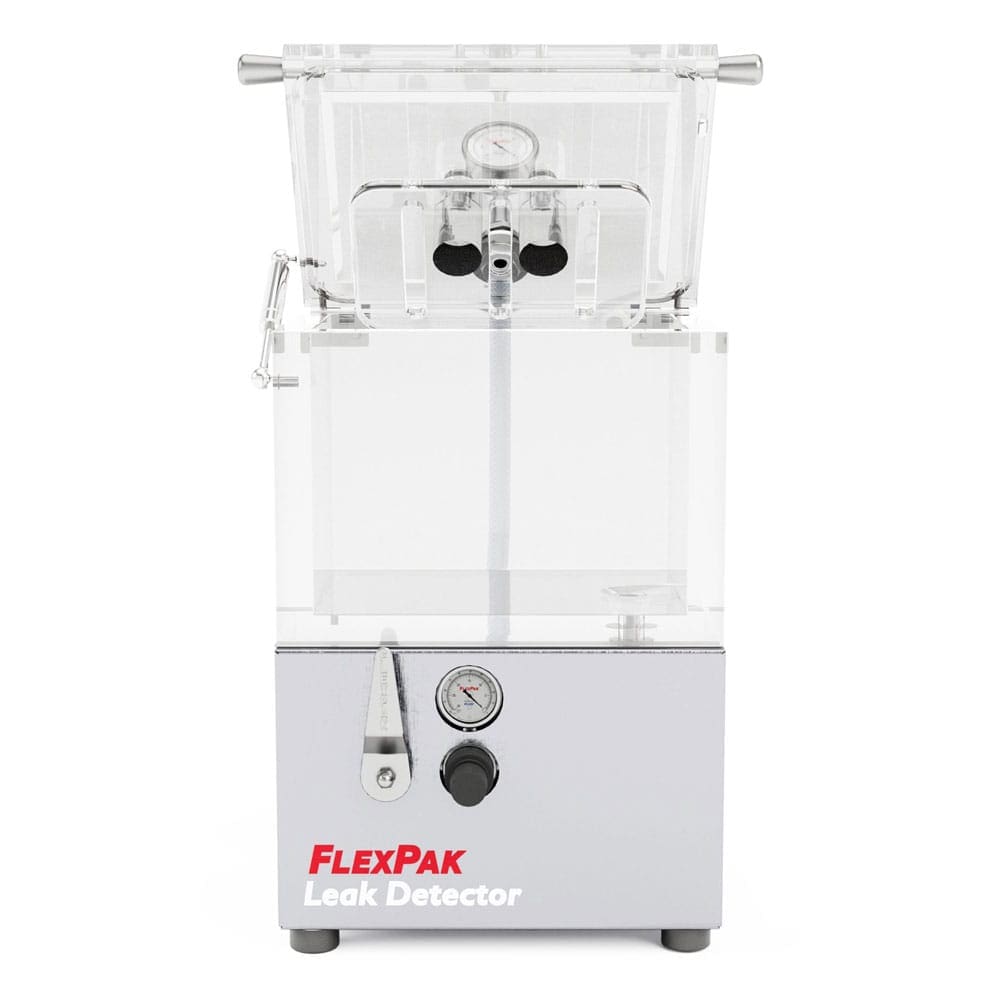
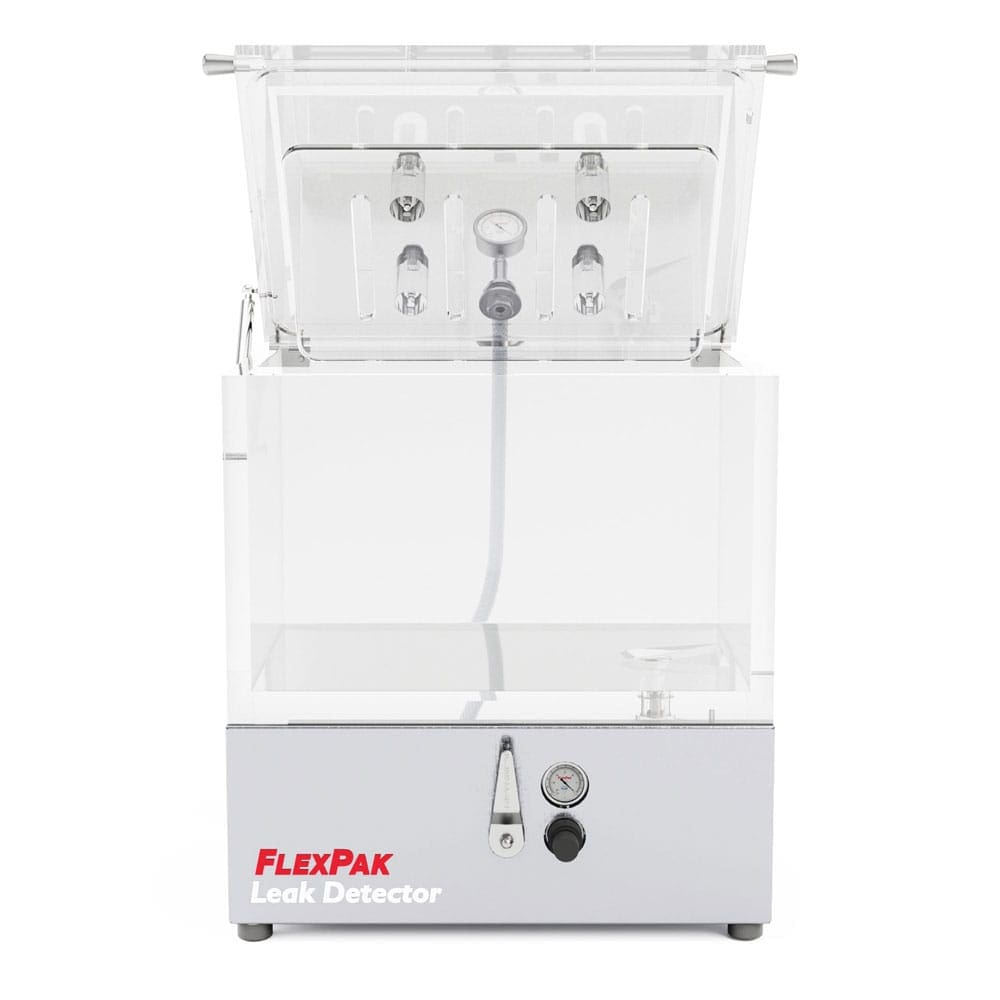
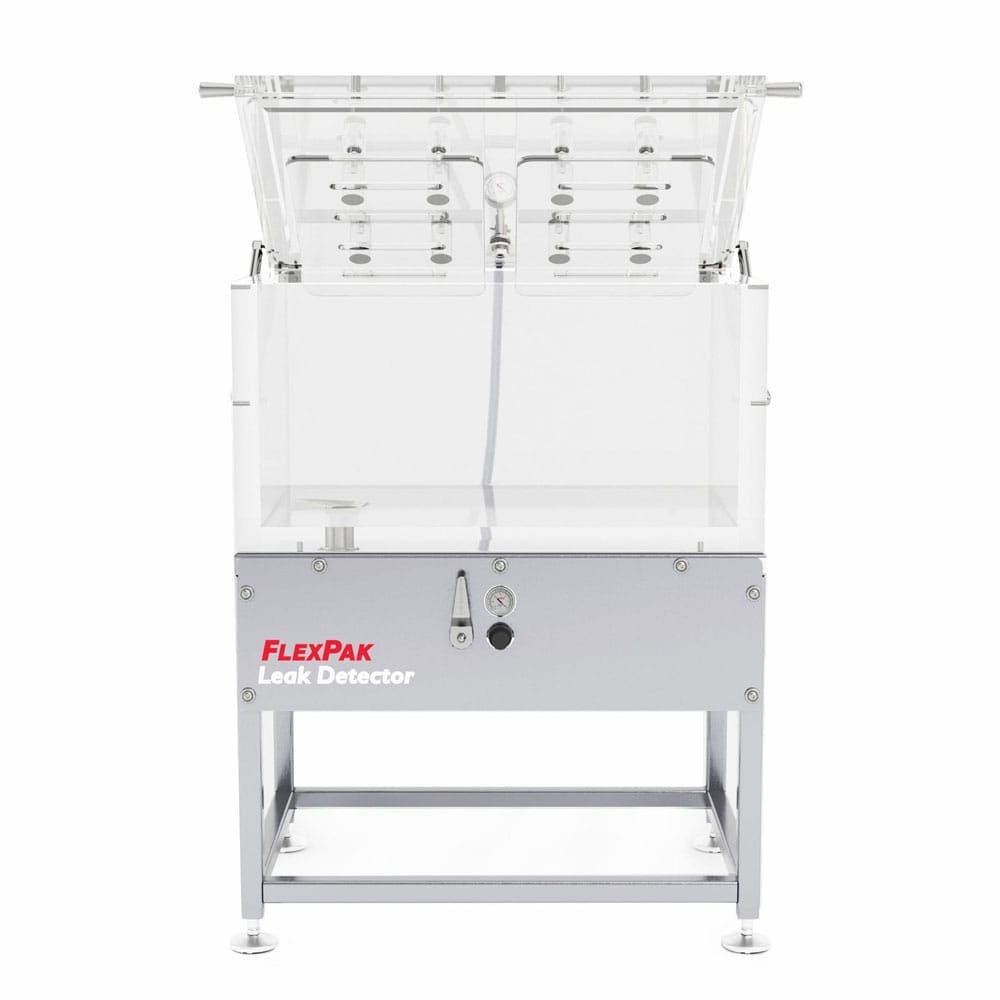
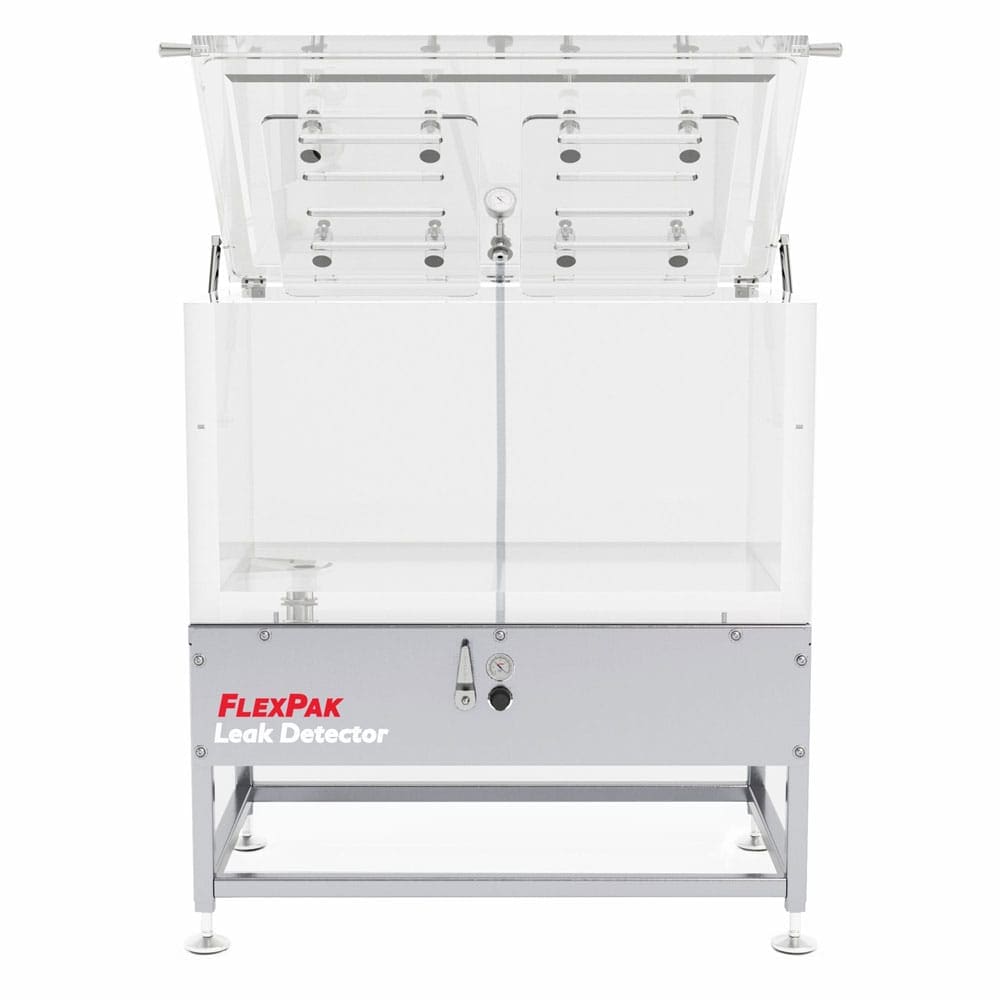
A package leak detector is a vacuum chamber testing system used to verify the seal integrity of flexible and semi-rigid packaging. The package is submerged in water inside a transparent chamber, vacuum is applied to stress the seal, and any leak is revealed as a visible stream of bubbles at the failure point. In food manufacturing QA, package leak detectors are used to catch gross seal failures — preventing spoilage, contamination, and recalls before product ships.
Typical response within 24 hours. Tabletop units often in stock and ready to ship.














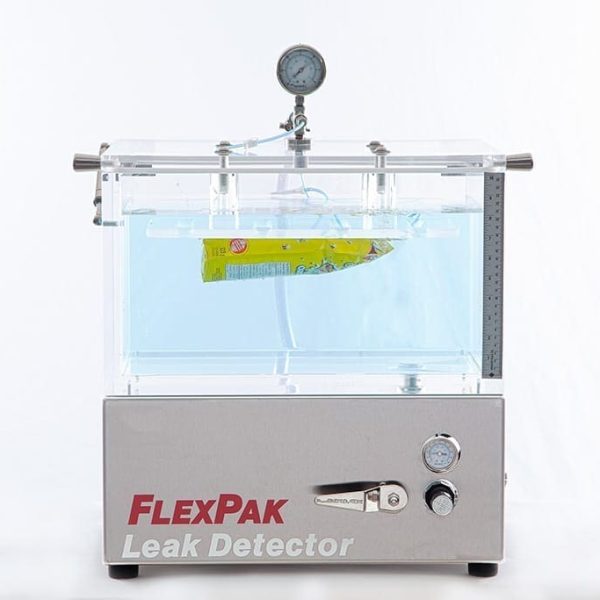
A single seal failure on your packaging line can trigger a chain reaction — from spoiled product reaching shelves, to customer complaints, to a full-scale recall that costs far more than the product itself.
For QA teams in food manufacturing, the stakes are clear: leaks compromise freshness, invite microbial contamination, shorten shelf life, and put your brand’s reputation at risk. Visual inspection alone can’t catch the seal failures that matter on a production floor — the defects that lead to problems are typically too small to see.
That’s where standardized leak detection comes in. A package leak detector gives your team a fast, repeatable, ASTM-compliant way to verify seal integrity on every production run — before product ships.
FlexPak package leak detectors use bubble emission testing — the method described in ASTM D3078 — to make seal failures visible so your team can identify exactly where a leak is occurring.
A typical test cycle takes around 30 seconds. Because the test is non-destructive and off-line, your team pulls representative samples from the production run without slowing the line.
The chamber is filled with water, and your sealed package is submerged.
The chamber draws down to a controlled vacuum level. This pressure differential stresses the package seal uniformly — without destroying the package or its contents.
If a seal failure exists, air escapes from inside the package and forms a visible bubble stream at the leak point. You can see exactly where the problem is — not just whether one exists.
FlexPak package leak detectors use bubble emission testing — the method described in ASTM D3078 — to make seal failures visible so your team can identify exactly where a leak is occurring.
The chamber is filled with water, and your sealed package is submerged.
The chamber draws down to a controlled vacuum level. This pressure differential stresses the package seal uniformly — without destroying the package or its contents.
If a seal failure exists, air escapes from inside the package and forms a visible bubble stream at the leak point. You can see exactly where the problem is — not just whether one exists.
A typical test cycle takes around 30 seconds. Because the test is non-destructive and off-line, your team pulls representative samples from the production run without slowing the line.
Need help choosing the right method for your packaging?
FlexPak leak detectors are configurable — choose the chamber size, vacuum source, and control package that fits your production environment and testing protocols.
Available in multiple sizes to accommodate packages ranging from small sachets (1 oz) to large bags (10+ kg). Transparent acrylic chambers allow visual inspection during every test. Lids require only about 5 lbs to lift or close — stainless gas springs handle the weight.
| Model | Type | Interior Dimensions | Vacuum Source |
|---|---|---|---|
| FP110808 | Table Top | 11″ × 8″ × 8″ | Compressed Air |
| FP110808-EVP | Table Top | 11″ × 8″ × 8″ | Electric Vacuum Pump |
| FP181210 | Table Top | 18″ × 12″ × 10″ | Compressed Air |
| FP181210-EVP | Table Top | 18″ × 12″ × 10″ | Electric Vacuum Pump |
| FP201413 | Table Top | 20″ × 14″ × 13″ | Compressed Air |
| FP201413-EVP | Table Top | 20″ × 14″ × 13″ | Electric Vacuum Pump |
| FPFL201413 | Floor Stand | 20″ × 14″ × 13″ | Compressed Air |
| FPFL201413-EVP | Floor Stand | 20″ × 14″ × 13″ | Electric Vacuum Pump |
| FP242015 | Floor Stand | 24″ × 20″ × 15″ | Compressed Air |
| FP242015-EVP | Floor Stand | 24″ × 20″ × 15″ | Electric Vacuum Pump |
| FP302015 | Floor Stand | 30″ × 20″ × 15″ | Compressed Air |
| FP302015-EVP | Floor Stand | 30″ × 20″ × 15″ | Electric Vacuum Pump |
| FP322619 | Floor Stand | 32″ × 26″ × 19″ | Compressed Air |
| FP392220 | Floor Stand | 39" × 22" × 20" | Compressed Air |
| FP392220-EVP | Floor Stand | 39" × 22" × 20" | Electric Vacuum Pump |
Model names correspond to interior dimensions in inches (width × depth × height). Contact FlexPak to confirm current model availability and to discuss custom sizing for your package requirements.
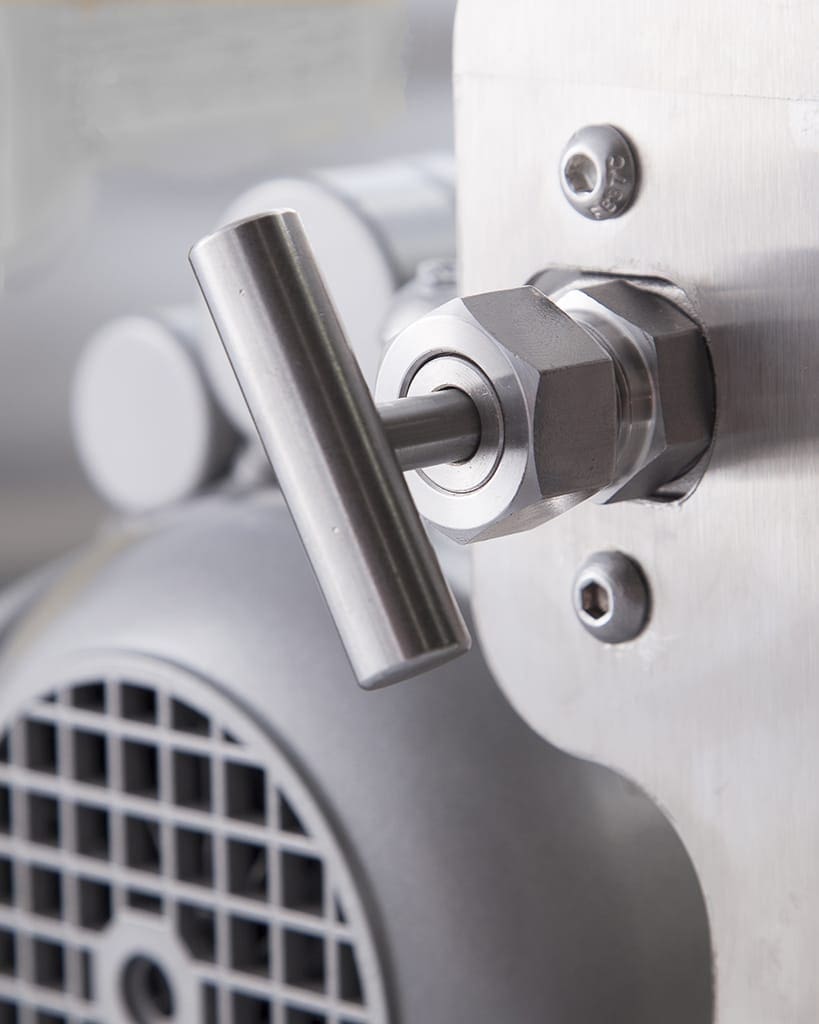
For facilities with existing compressed air lines. No electrical power required for the leak detector itself. Standard dry plant air is sufficient.
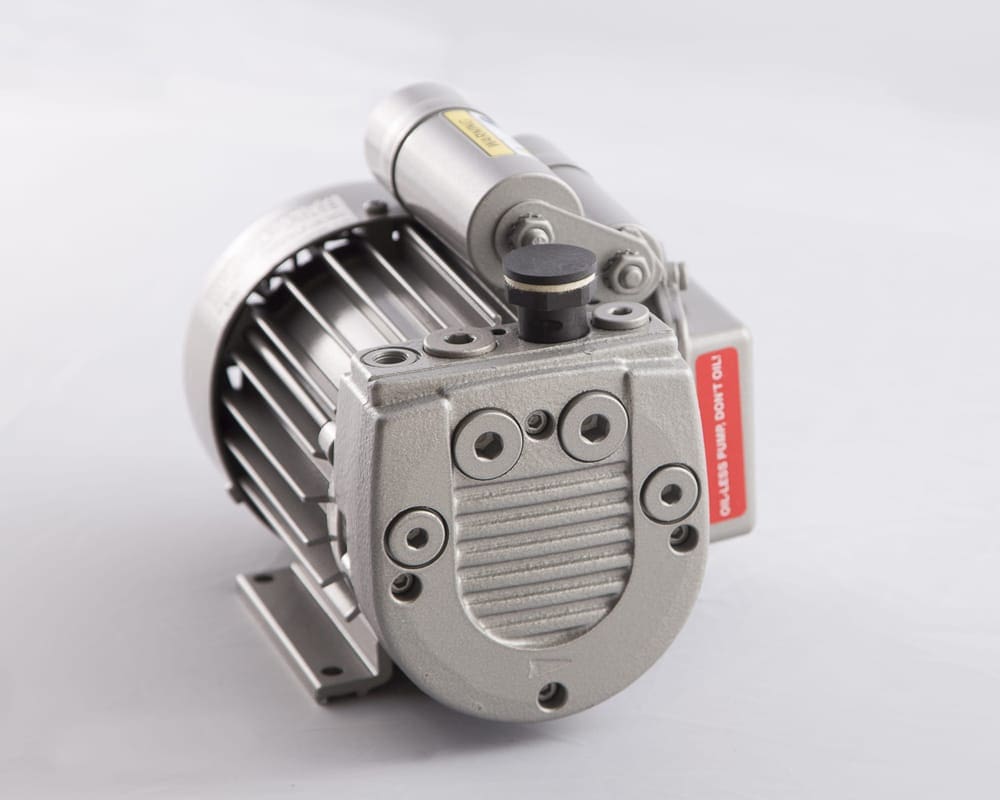
For facilities without compressed air access, or when you need a self-contained, plug-in unit. Oil-less dry pump. Requires 120V or 240V power supply.
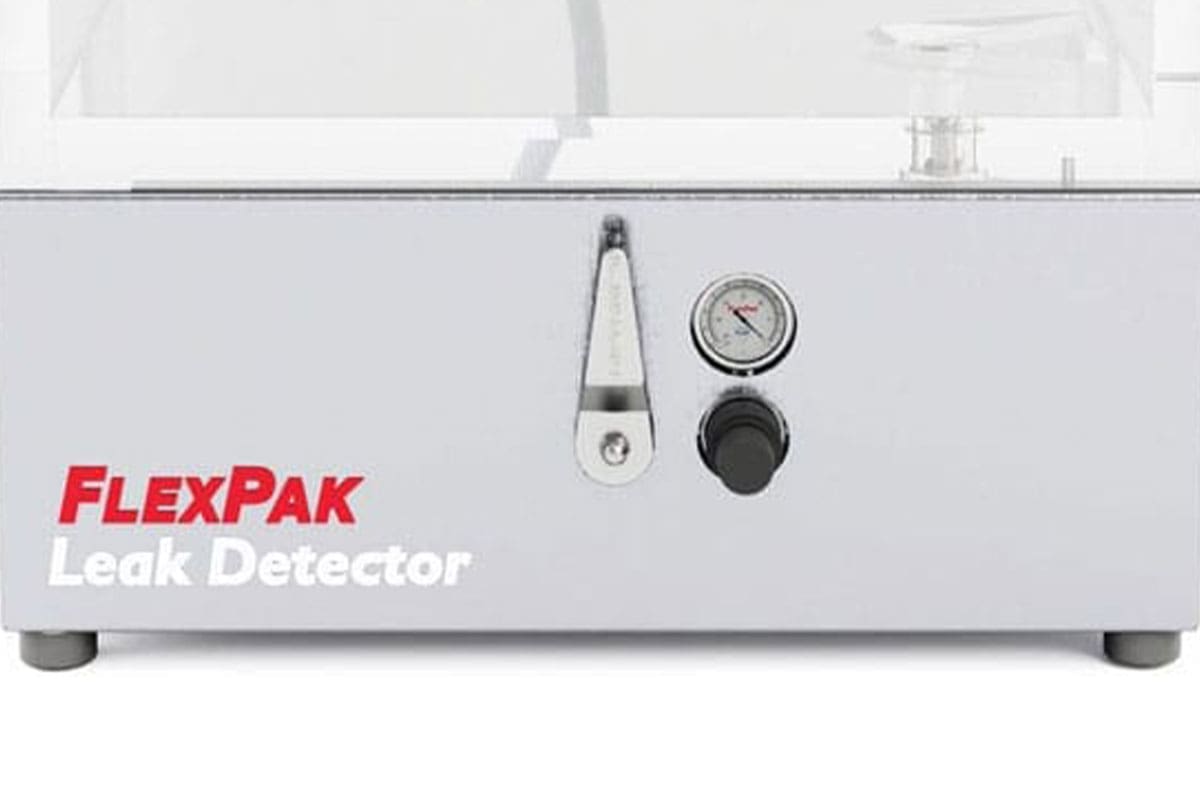
Operator-controlled vacuum and timing. Simple, no automation required.
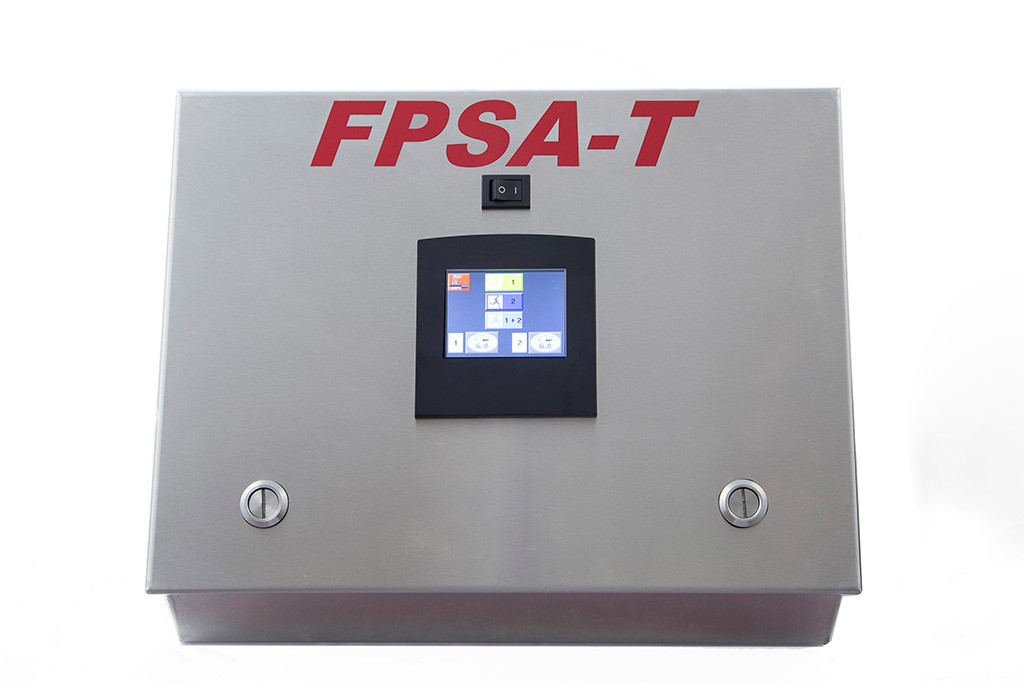
Automates vacuum draw and hold time. Economical step up from manual operation.
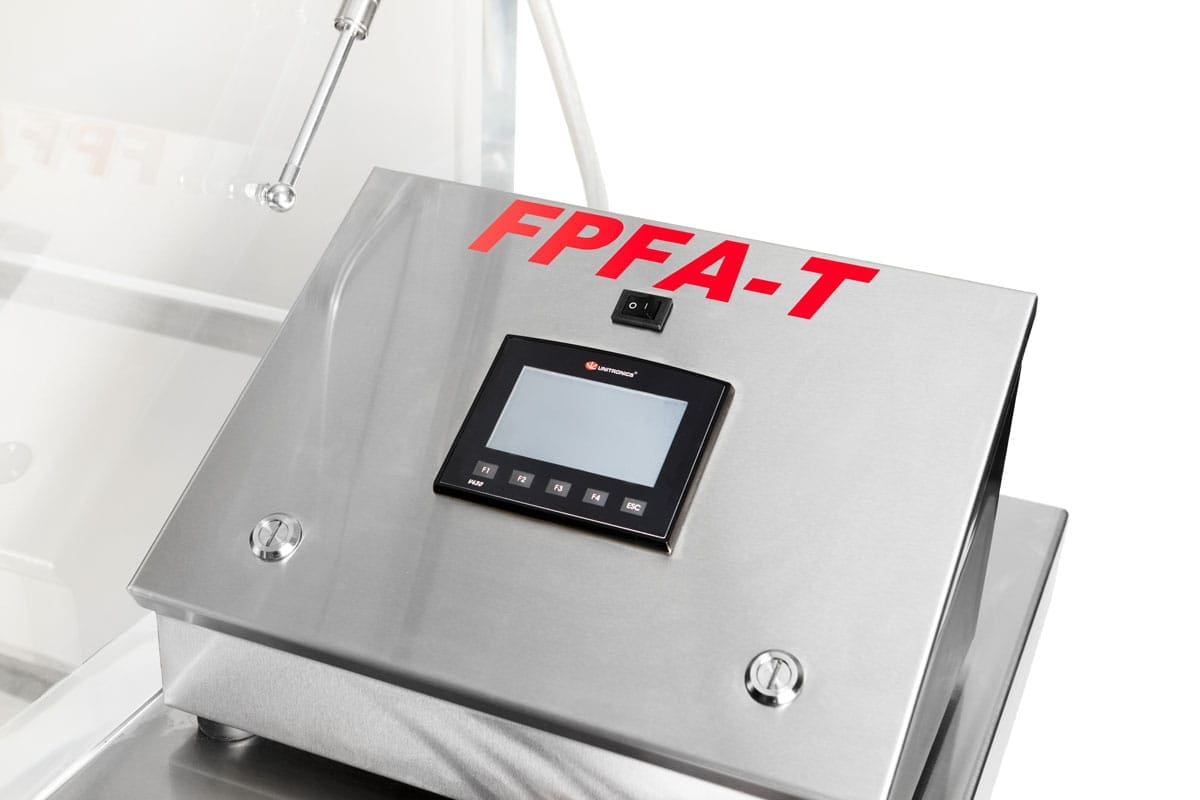
Full test automation with data logging. For teams needing documented, repeatable test records for audits and compliance.
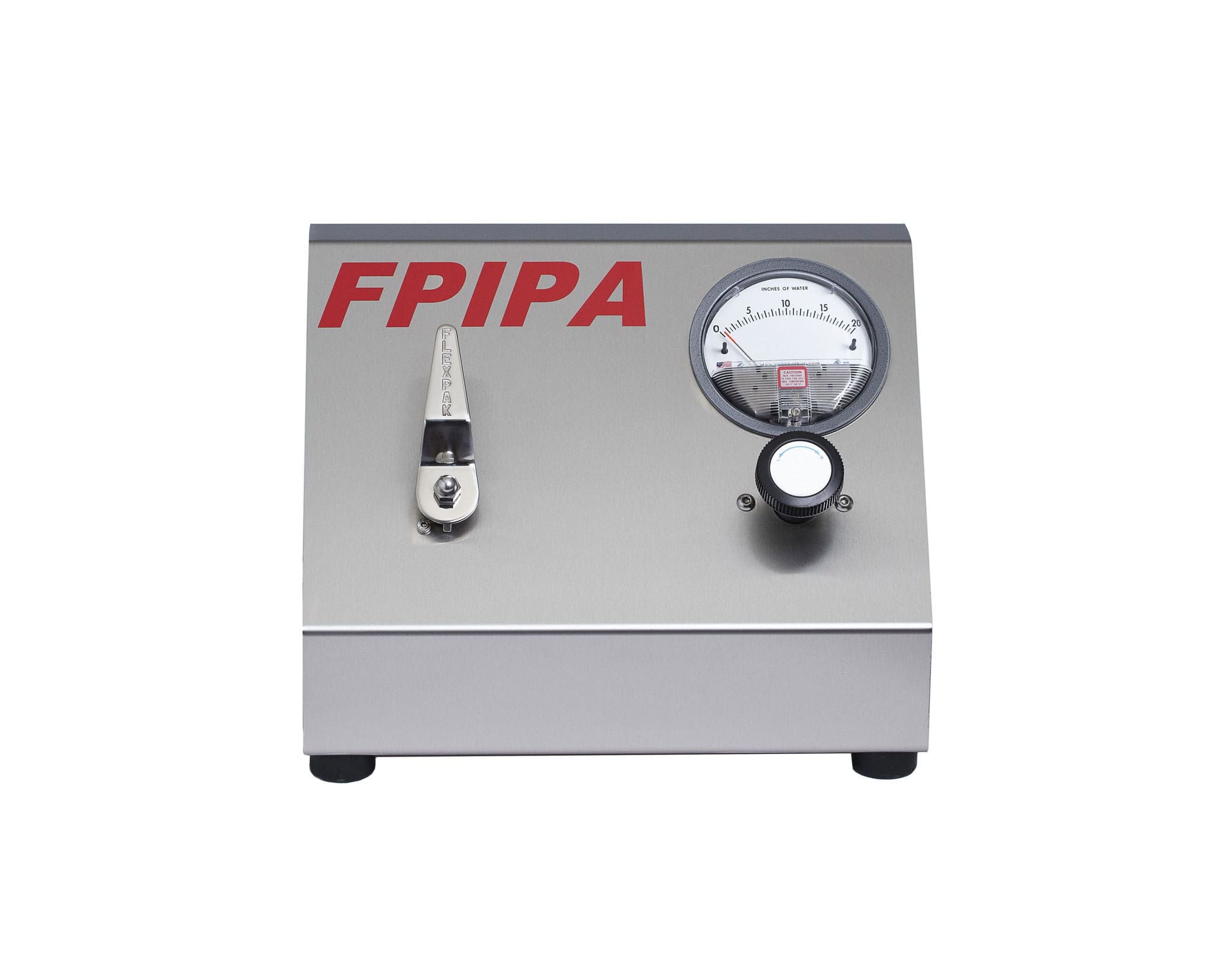
Enables ASTM F2096 internal pressurization bubble testing — typically used for medical, pharma, and device packaging. Available as add-on or standalone unit.
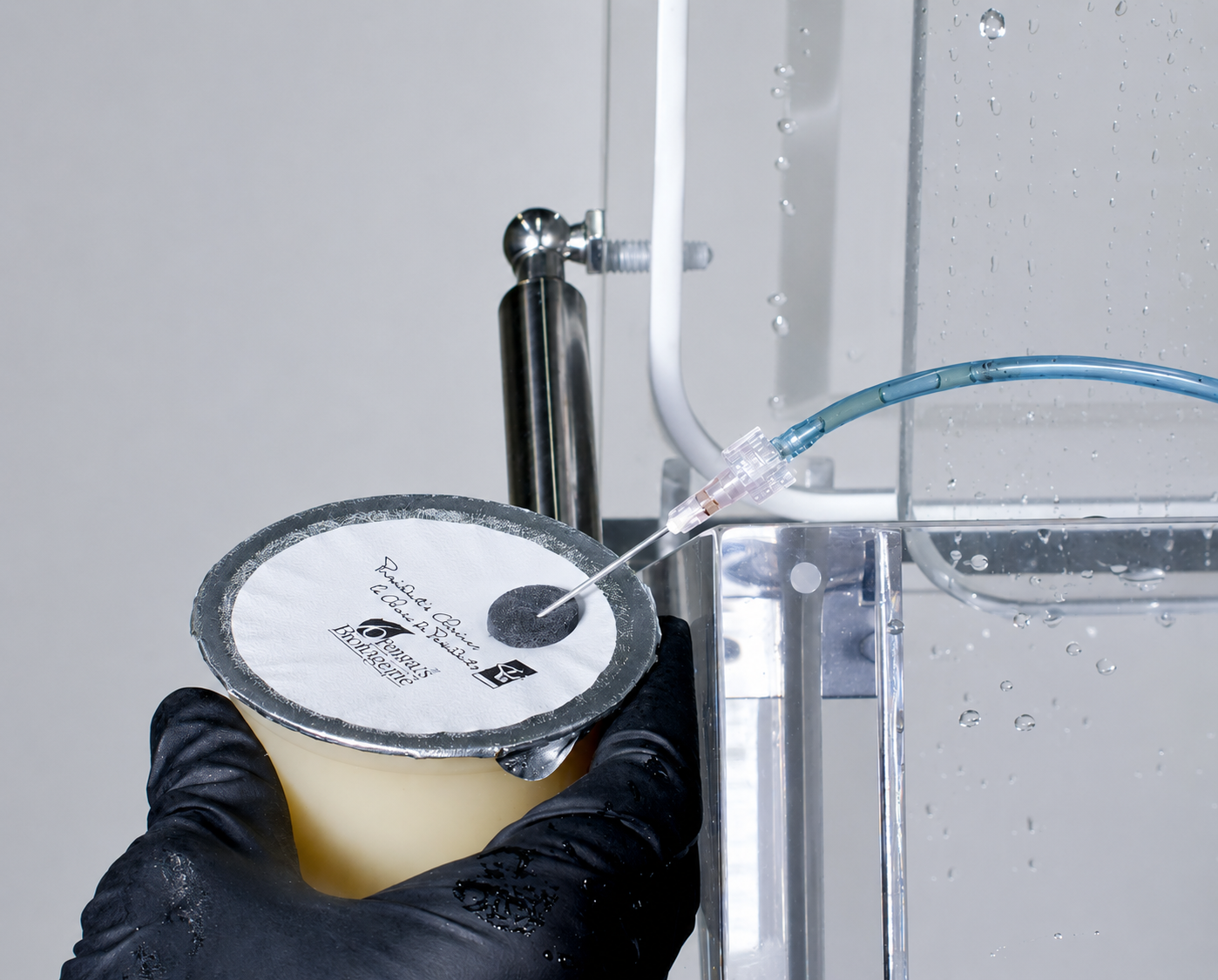
Inflates vacuum-sealed or low-headspace packages with air so they can be tested via D3078 bubble emission. Required for vacuum-sealed meats and similar formats.
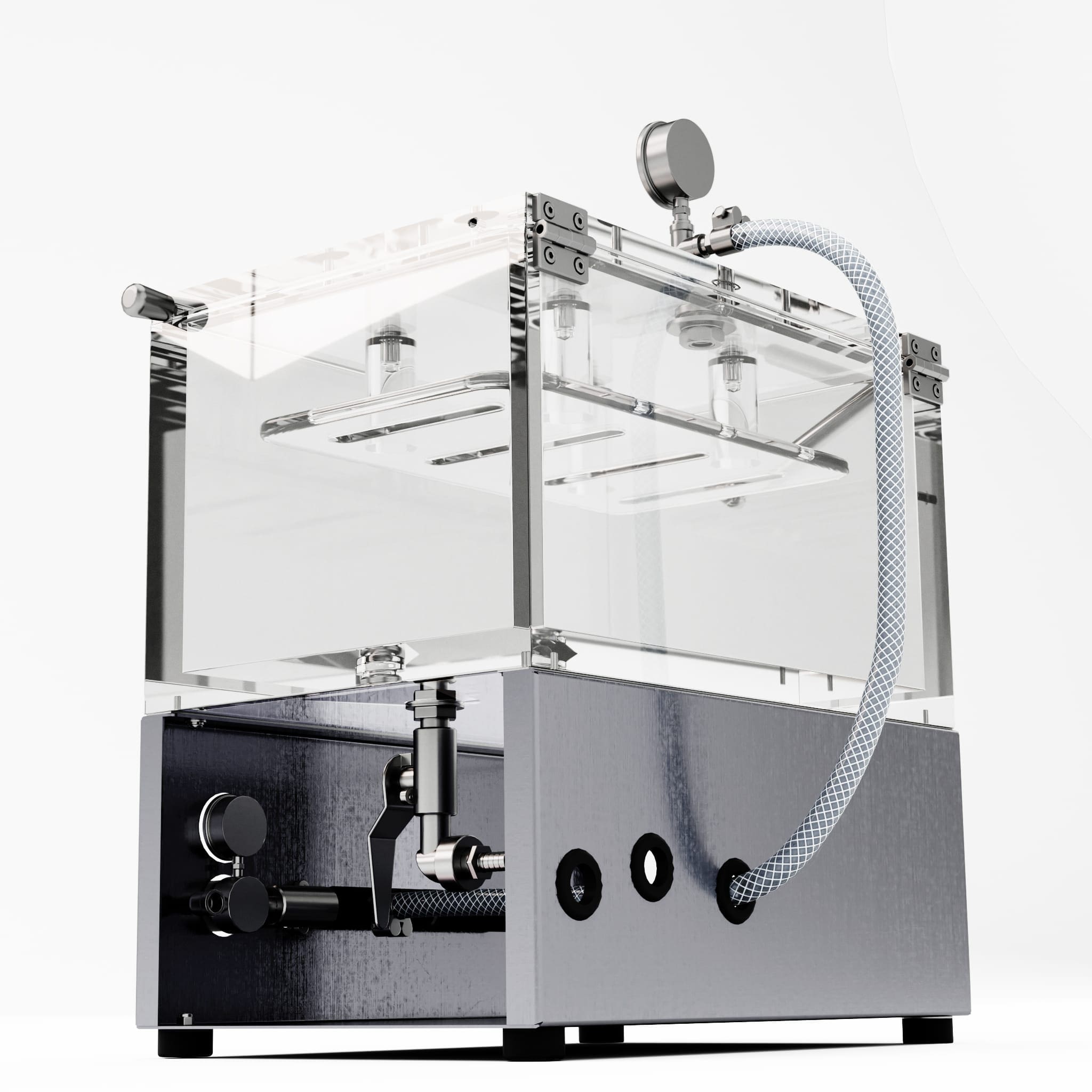
All-stainless construction, high-speed drains, minimal hang-up points, and easy-access corners. All units require a water source for filling the chamber and a means to drain after testing — a dedicated water line is not required, as the chamber can be filled and drained manually.
FlexPak leak detectors are used across food manufacturing, co-packing, and packaging QA environments to test a wide range of package formats.

Pouches, pillow bags, flow wraps, stand-up pouches, and multi-layer film bags. This is the most common format tested with ASTM D3078 bubble emission. Flexible packaging is where seal failures most frequently occur due to variability in sealing machine setup, film properties, and production speed.
Rigid and semi-rigid trays used in fresh protein, ready meals, and deli packaging. Seal integrity on trays is critical for maintaining modified atmosphere conditions and preventing contamination during distribution.

Gas-flushed trays and pouches where seal integrity directly affects shelf life and product safety. A compromised seal allows oxygen ingress, accelerating spoilage in products designed for extended shelf life.

Meats, cheeses, and other vacuum-packed products. These require the VAC Attachment to introduce air into the package before bubble emission testing can be performed. Without the attachment, vacuum-sealed packs have no internal pressure differential to reveal leaks.

Single-serve formats for powdered beverages, supplements, condiments, and similar products. Tested using the dedicated stick pack fixture, which allows testing of multiple packs in a single cycle — important for high-volume production lines where individual pack testing would be impractical.
Tested via dry chamber methods (ASTM D5094) using absorbent indicators and visual detection of escaping liquid. No water submersion required. This method applies to containers like bottles and vials where the product itself is liquid.
A note on compliance: FDA guidelines emphasize the importance of package integrity as part of quality programs. Food safety frameworks such as HACCP and GMP commonly expect manufacturers to verify seal integrity as part of production QA. FlexPak equipment supports these programs by providing ASTM-compliant testing methods with repeatable, documented results.
Designed to detect gross leaks in flexible packages with headspace. Packages are submerged under vacuum and visually inspected for bubble streams at seal failure points. Actual sensitivity depends on package design, headspace volume, product, and test parameters.
A qualitative pass/fail test for gross leaks via internal pressurization. Packages are pressurized from within and submerged — bubbles indicate seal failures. Performed using the FPIPA attachment.
A conditioning method — not a detection method. Simulates the pressure differentials packages experience during air shipping or high-altitude ground transport. Must be paired with a detection method (typically D3078) to identify any resulting seal failures that the pressure stress reveals.
A gross leak detection method for liquid-filled rigid containers. Uses absorbent indicators, pressure differentials, and visual detection of escaping liquid. Does not require water submersion.
Leak detector works great. No issues and excellent company to deal with.
Leak tester works great and this will save me hours of time every week. Ultimately I’ll be able to turn this over to our hourly workforce. Thanks again for a great product!
We have a tank purchased in 2013 and it's still going with no end in sight, used every day. It’s a solid product and has become an essential part of our quality system.
FlexPak has an outstanding product, pure and simple. It is fast, easy to clean, and very reliable in its feedback. I’m so glad we made this choice; we are able to make small adjustments on the fly to our packaging equipment because of its precise accuracy. 5 Stars for FlexPak!
A package leak detector works by submerging a sealed package in water inside a transparent vacuum chamber. When vacuum is applied, the pressure differential stresses the seal. If a leak exists, air escapes from the package and rises as visible bubbles, showing exactly where the failure is. This is the bubble emission method described in ASTM D3078. A typical test takes around 30 seconds.
Bubble emission testing (ASTM D3078) submerges packages in water under vacuum and uses visible bubbles to show the location of gross leaks. It is widely used for flexible food packaging like pouches and bags. Vacuum decay testing (ASTM F2338) measures pressure changes inside a sealed test chamber to detect smaller leaks without water — it is a deterministic method more commonly used in pharmaceutical and medical packaging, though its scope also includes food and industrial applications. FlexPak equipment uses the bubble emission method, which shows you where the leak is, not just whether one exists.
FlexPak offers multiple chamber sizes, from tabletop units for small sachets and pouches (as small as 1 oz) to floor-standing models for large bags up to 10+ kg. Model names correspond to interior dimensions — for example, the FP181210 has an 18″ × 12″ × 10″ testing area. Custom sizing is also available.
Yes. Vacuum-sealed and low-headspace packages require the VAC Attachment, which introduces air into the package so it can be tested under standard D3078 bubble emission conditions. This is commonly used for vacuum-packed meats, cheeses, and MAP trays.
FlexPak leak detectors support ASTM D3078 (bubble emission), ASTM F2096 (internal pressurization via the FPIPA attachment), ASTM D6653 (altitude simulation conditioning), and ASTM D5094 (dry chamber for liquid-filled rigid containers).
Standard FlexPak units use a compressed air venturi for vacuum generation. If your facility doesn’t have compressed air lines, the Electric Vacuum Pump (EVP) option provides a self-contained, plug-in alternative requiring a 120V or 240V power supply.
No. Bubble emission testing is a non-destructive test method. The package and its contents remain intact after testing. This makes it practical for off-line sampling from your production run without wasting product.
Pricing depends on chamber size, vacuum generation method (compressed air venturi vs electric vacuum pump), control package (manual, semi-automatic, or fully automatic), and any add-on attachments. Request a quote for your specific configuration — FlexPak typically responds within 24 hours.
Tabletop units are often in stock and ready to ship. Floor-standing units and configurations with add-ons typically have a minimum lead time of about two weeks. Contact us for current availability.
Share your package dimensions and the number of packages you’d like to test at once. FlexPak’s team will recommend the right chamber size and configuration for your requirements.
Standard units need access to compressed air and a water source for filling the chamber. EVP units need a power outlet instead of compressed air. A dedicated water line is not required — the chamber can be filled and drained manually. All units include high-speed drains and stainless components for easy washdown.
Your packages go through a lot before reaching their destination. FlexPak makes it easy to verify they’ll arrive sealed and safe — with a test that takes around 30 seconds and shows you exactly where problems are.
Download Equipment Spec Sheet → Take the details with you. Compare configurations offline.